A candidate can interview well and still struggle after joining. Another may have an unconventional CV but quickly become a strong performer. The problem is that many recruitment processes rely heavily on evidence that is easy to collect rather than evidence that is closely connected to future performance.
Define quality of hire for the role
For a sales role, quality may include revenue, target attainment and time to productivity. For customer service, it could include quality scores, attendance and retention. For a leadership role, performance ratings, team outcomes and progression may be more useful.
Start by agreeing what a successful hire looks like in the organisation.
Useful measures can include:
- probation success
- manager performance ratings
- objective role performance
- retention
- time to competence
- promotion or progression
- attendance
- behavioural or competency ratings
The important point is to use outcomes that genuinely reflect success in the role.
Assess the characteristics that matter
Once quality is defined, work backwards.
What capabilities, preferences and behaviours are likely to contribute to those outcomes?
The Clevry platform provides several types of psychometric assessment that can be combined according to the role.
Ability tests measure work-related reasoning potential across verbal, numerical, abstract, checking and mechanical areas. Situational judgement tests explore how candidates respond to realistic workplace scenarios. Personality questionnaires examine typical preferences, motivations and behavioural tendencies.
Our personality library contains more than 45 personality scales across interpersonal style, thinking style, emotional style, motivational values and culture fit.
Employers can create a bespoke questionnaire around the characteristics relevant to a role or competency framework, rather than using an identical personality assessment for every vacancy.
Use job matching carefully
Our job-match feature allows employers to define the preferred position on relevant personality scales.
This can help turn a personality profile into a more role-specific interpretation.
Importantly, a higher score is not automatically better. Different roles may benefit from different preferences. A role requiring constant social interaction may call for a different profile from one involving extended independent work. A highly structured operational role may place different demands on someone than a creative, ambiguous position.
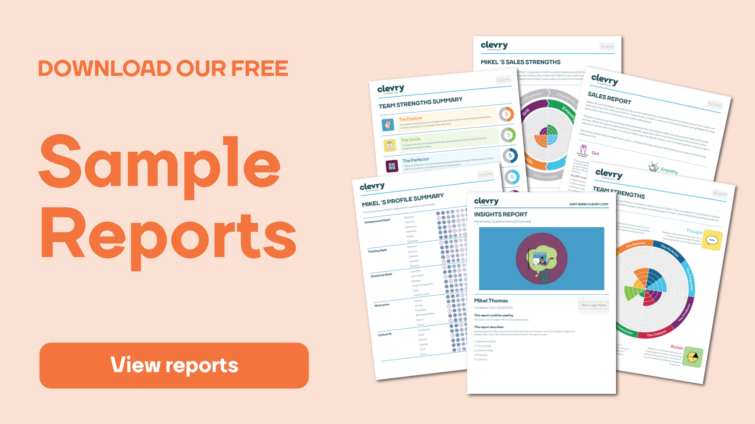
Once a questionnaire is job matched, the platform can generate a Selection Report (as well as several other useful reports from the same data) showing the degree of fit between the individual’s assessment results and the role requirements.
Combine assessment methods
Different methods provide different types of evidence.
An ability test can show how effectively someone handles particular reasoning tasks. A situational judgement test can explore workplace decision making. A personality questionnaire can reveal preferences and motivational tendencies. An interview can then test examples, context and experience.
Assessment results should always be considered alongside other information about the candidate.
This is especially important for personality questionnaires. They are self-report measures of preferences and typical styles, not objective measures of competence.
Make interviews more diagnostic
Interviews often introduce inconsistency because different managers focus on different questions and impressions.
Our popular Interviewer Report can help by using personality assessment results to highlight areas for further exploration and provide suggested questions.
For example, if a candidate shows a strong preference on a particular personality scale, the interviewer can explore how that preference appears in practice, where it has helped performance and where the candidate has needed to adapt.
This makes the interview more targeted.
Assessment generates hypotheses. The interview provides an opportunity to test them.
Use reports that hiring managers can understand
Psychometric data only improves hiring quality if decision makers can use it.
Our Selection Report provides a summary of job fit alongside more detailed information on relevant assessment areas. Traffic-light presentation helps users identify where alignment appears stronger or weaker.
Ability Test Reports provide context on cognitive test performance. Interviewer Reports translate personality information into interview guidance.
Track what happens after the hire
This is where quality-of-hire measurement becomes valuable.
After introducing assessment, collect performance and retention data for successful candidates.
The organisation can then compare pre-hire assessment information with later outcomes.
For example:
- Do higher performers show particular patterns on relevant ability tests?
- Do employees who remain beyond the first year differ from early leavers on any role-relevant measures?
- Are candidates receiving very high job-match scores actually performing better?
- Does one assessment appear to add useful information while another contributes little differentiation?
The purpose is not to search for convenient proof that the assessment works. It is to test whether the process predicts outcomes that matter.
Review pass rates and discrimination
Assessment processes should be reviewed periodically.
If almost every candidate passes an ability-test threshold, the test may not be adding much value at that stage. If almost nobody passes, the threshold or assessment choice may be unrealistic.
Similarly, if job-match scores cluster tightly together, the role profile may not be discriminating strongly enough between candidates.
Organisations should review assessment distributions, progression rates and later performance data together.
We use norm-referenced scoring to help employers understand candidate results in comparison with relevant groups, and bespoke comparison groups can be created for organisations with sufficient candidate volume.
This can support a more informed review of what scores mean within a particular recruitment context.
Use assessment data after selection
Quality of hire is influenced by what happens after the candidate joins.
Clevry users can use the same personality questionnaire data to generate an Onboarding Report for the successful hire.
The report gives line managers information about working preferences, strengths, motivation and ways to support the individual during onboarding.
Depending on the questionnaire completed, the data can also support Team Strengths, Sales Report and Leadership reports.
Create a continuous improvement loop
Improving quality of hire should be an ongoing process.
Define success. Assess relevant characteristics. Make the hiring decision. Collect performance and retention outcomes. Compare those outcomes with assessment data. Adjust the process where the evidence supports a change.
That is how assessment can contribute to better quality of hire. Not by promising perfect predictions, but by giving employers more relevant evidence before the decision and better data to learn from afterwards.
Speak to one of the team for more information.