
A CV tells you where someone has worked, what qualifications they hold and how they describe their experience. It does not directly measure how they process information, respond to workplace situations, approach problems or prefer to work.
For organisations moving towards skills-based hiring, the objective is not necessarily to remove the CV entirely. It is to reduce the amount of decision-making weight placed on background information and introduce more relevant evidence earlier in the process.
Start with the demands of the role
Skills-based hiring works best when assessment begins with the job rather than the candidate.
Before deciding what to measure, identify the requirements that genuinely influence performance. These might include numerical reasoning, written comprehension, attention to detail, decision making, resilience, listening, adaptability or particular behavioural tendencies.
The Clevry platform provides personality questionnaires, ability tests and situational judgement tests that can be combined into a single assessment process according to the role. This gives employers several different types of evidence rather than asking one assessment to answer every question.
Use ability tests where cognitive ability matters
Previous job titles are an imperfect proxy for what someone can do.
Ability tests are designed to assess performance on work-related reasoning tasks and measure potential rather than relying solely on academic achievement or stored knowledge.
Available tests through the Clevry platform include verbal, numerical, abstract reasoning, checking and mechanical ability. Tests are offered at different levels so employers can choose an assessment suited to the role population rather than applying the same difficulty to everyone.
For example, numerical reasoning may be relevant for an analyst or commercially focused role. Checking ability may matter more where accuracy is critical. Mechanical reasoning may be useful in production, engineering or technical environments.
Use situational judgement to assess workplace decisions
A CV can show that someone worked in customer service. It cannot tell you how they are likely to respond when a customer becomes difficult, priorities conflict or a colleague needs support.
Situational judgement tests give candidates realistic workplace scenarios and ask them to identify or rate possible responses.
SJTs are best used as a way to assess behavioural tendencies while also giving candidates a more realistic preview of the role. This can make the assessment more relevant to both sides of the recruitment process.
Use personality to understand working preferences
Personality assessment provides a different type of information.
Our personality questionnaires explore typical preferences and tendencies across areas including interpersonal style, thinking style, emotional style, motivational values and culture fit. Employers can use established questionnaires or build a bespoke questionnaire around the characteristics relevant to the role, values or competency framework.
This flexibility matters for skills-based recruitment because personality should not become a generic filter. The traits that support success in one role may be less important, or desirable in a different direction, in another.
The Clevry platform also allows employers to define what good looks like on relevant personality scales and generate a Selection Report describing the degree of fit between the candidate’s results and role requirements.
We would advise against treating personality questionnaires as simple pass-or-fail screens. Personality results are better used to understand preferences, generate hypotheses and inform subsequent interviews and decisions.
Redesign the recruitment funnel
A traditional recruitment process might look like this:
- Application, CV review, recruiter shortlist, hiring-manager review, interview, final decision.
- A more skills-led process could look like this:
- Application, relevant assessment, evidence-based shortlist, structured interview, final decision.
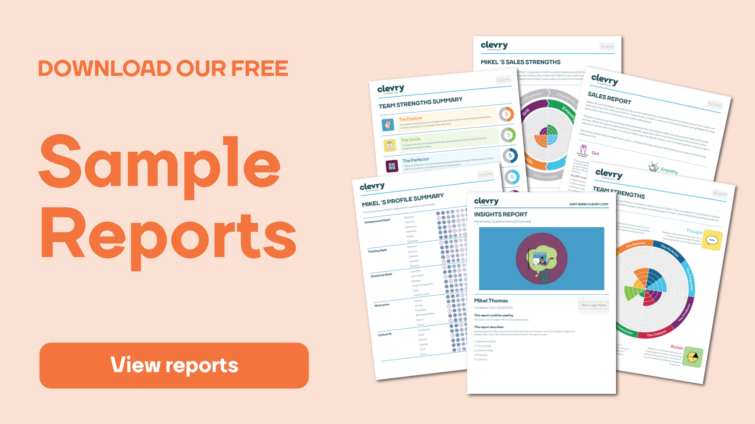
With the Clevry platform you can combine several assessments into one easy process. Recruiters can invite candidates through a campaign link, in bulk or individually, then monitor completion and access results through the platform.
For more complex hiring processes, users can combine application forms, psychometric assessments, recorded video interviews, written exercises and other virtual assessment activities.
This makes it possible to redesign the candidate journey rather than simply adding a test after traditional CV screening.
Give hiring managers usable evidence
Skills-based hiring only works if the information produced is easy to use.
Our Selection Report can provide an overall job-fit view and detailed information about alignment with role requirements. Ability Reports explain performance on the ability tests completed.
The Interviewer Report can then use personality information to suggest questions for further exploration.
This creates a particularly useful progression. Assessment identifies evidence before an interview. The interview then tests, challenges and adds context to that evidence.
The aim is not to hand the hiring decision to an algorithm.
Reduce bias without pretending assessment is perfect
One attraction of skills-based hiring is the opportunity to focus more directly on job-relevant evidence.
Standardised assessments can reduce some of the inconsistency created when recruiters rely heavily on different CV formats, prestigious employer names or subjective interpretations of experience.
However, responsible assessment still requires careful test selection, appropriate comparison groups, accessible processes and informed interpretation.
All our assessments are norm referenced, meaning candidate results are compared with relevant groups of previous test takers. Check out our Help Centre for further guidance on appropriate report interpretation, confidentiality and verification of ability scores.
Move from credentials to evidence
CVs still have value. Experience, qualifications and career history can all provide relevant context.
The problem arises when they become the main evidence used to decide who has potential.
A skills-based process asks a better question: what evidence do we have that this person can meet the demands of this role?
The Clevry platform gives employers a way to answer that question using different forms of assessment within one platform. Ability tests can measure relevant reasoning capability. SJTs can explore workplace decision making. Personality questionnaires can reveal preferences and motivational tendencies. Job matching and reporting can then translate the results into information recruiters and hiring managers can use.
That does not eliminate human judgement. It gives human judgement better evidence to work with.
For organisations serious about skills-based hiring, that is the fundamental change. The shortlist becomes less dependent on who looks strongest on paper and more dependent on who demonstrates the characteristics relevant to success.