Using psychometric assessments to understand leadership potential is not about labelling people as “leaders” or “non-leaders”. It is about giving your organisation a structured way to discuss how someone is likely to lead, what drives them, and how they can grow into bigger roles over time.
Clevry’s leadership model
Clevry’s Leadership Model is a psychometric framework for understanding leadership potential that combines personality, cognitive ability, emotional intelligence and work-style tendencies. It groups leadership into four domains that cover how someone leads people, work, themselves and the future.
You can summarise the four areas as:
- Leading People
Working with others, supporting others, connecting and networking. This area focuses on how leaders build relationships, develop people, handle conflict, and create a sense of belonging.
- Leading Tasks
Approaching tasks, decision making, ambiguity and prioritisation. This covers planning, execution, judgement under uncertainty and the ability to balance speed with accuracy.
- Leading Yourself
Confidence, self-belief, coping with pressure and dealing with emotional demands. This area reflects personal resilience, self-management and emotional regulation.
- Leading the Way
Strategic mindset, long-term vision, adaptability, learning agility, openness to change and influencing others. This is about setting direction, thinking beyond the immediate, and shaping the wider system.
The same model is used both for:
- Selection. Recruiting or promoting leaders into new roles
- Development. Understanding current leaders’ strengths and growth areas
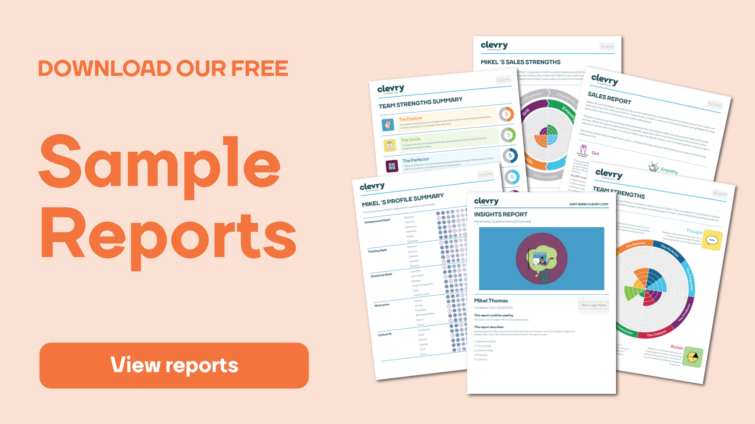
The Leadership Report translates this model into a clear narrative. It shows where an individual is likely to excel and where they may face challenges, based on their natural tendencies and leadership style. You can then use those insights directly in feedback, development planning and succession conversations.
You can also align the four domains to different leadership needs.
- Transformational leadership
Often requires strong Leading People and Leading the Way. Inspiring others, shifting culture, creating alignment around a vision.
- Operational leadership
Often depends more on Leading Tasks and Leading Yourself. Delivering reliably, managing complexity, coping with pressure and keeping teams focused.
This simple distinction helps you move from generic “leadership potential” to “the type of leadership this role actually needs”.
Using assessments in leadership selection & development
Leadership impact is rarely explained by a single score, so assessments in leadership selection and development should always be interpreted as patterns rather than isolated results.
When you look across domains such as how someone leads people, delivers tasks, manages themselves and sets direction, you gain a more accurate picture of how they are likely to perform in real roles. This pattern-based view helps you distinguish different but equally effective leadership styles, identify strengths that are already supporting performance, and highlight risks that may emerge under pressure or in bigger roles. Used in this way, assessments become a structured aid to judgement in both hiring and development decisions, rather than a simplistic filter that labels people as “leaders” or “non-leaders”.
For example.
- A leader who is strong in Leading the Way and Leading People, but lower in Leading Tasks, may be visionary and inspiring but prone to underestimating operational detail. Development here could focus on building a stronger delivery team around them and improving planning discipline.
- A leader who is strong in Leading Tasks and Leading Yourself, but lower in Leading People, may deliver reliably under pressure but struggle to engage and retain talent. Development might focus on coaching skills, feedback conversations and empathy.
Discussing patterns across the four domains keeps the conversation nuanced, instead of reducing people to “born leaders” or “not leadership material”.
Treat each preference as a trade-off
Every leadership style brings strengths and risks.
- High emotional control in Leading Yourself can provide stability during crises, yet may make it harder for others to read the leader’s reactions.
- High sociability in Leading People can develop strong networks, yet may lead to overcommitment or reduced time for deep thinking if not managed.
In feedback, present both sides. Explain where a pattern is a real asset, and where it might need conscious adjustment in certain situations. This avoids stereotyping while giving practical guidance.
Clevry’s Leadership Workshop. Turning insight into action
To help embed the framework in your organisation, Clevry’s Leadership Workshop brings the model to life for HR, managers, senior leaders and high-potential individuals.
A typical workshop includes:
- Pre-work
Participants complete Clevry’s enhanced personality questionnaire in advance, so leadership reports and profiles are ready to explore.
- Ice-breaker and group exploration
The session opens with discussion around different leadership styles, highlighting that there is no single ideal way to lead. This helps surface assumptions and prepares people to see the four domains as complementary rather than hierarchical.
- Introduction to the Clevry Leadership Model
Facilitators walk through the four leadership areas and their subcategories, with examples of how each shows up in day-to-day behaviour.
- Individual and group reflection
Participants review their own Leadership Report and discuss patterns. Where are they strongest Which areas feel natural Which feel more effortful How does this match the leadership demands of their current role.
- Action planning
Each person defines clear leadership development goals based on their profile and the discussion. For example, a goal to build influencing skills in Leading the Way, or to strengthen feedback conversations in Leading People.
The result is that your organisation does not just “have data”. Leaders understand their own tendencies, HR has a consistent framework, and development plans are rooted in evidence rather than generic competency lists.
If you want a clearer, evidence-based view of how your current and future leaders will perform, Clevry’s leadership assessment and leadership workshops give you a practical place to start. By turning psychometric insight into concrete development actions, you can strengthen selection decisions, accelerate growth and build a more confident leadership pipeline.
Speak to one of the team about using the Clevry Leadership Model in your next leadership hire and development programmes or book a quick demo at your convenience.