This is a question we hear a lot on sales calls. Assessment data is often collected for one immediate purpose: to support a hiring decision. A candidate completes a personality questionnaire, an ability test or another assessment, and the results help the organisation decide whether they are likely to succeed in the role.
That is useful, but it is also a narrow way to think about assessment.
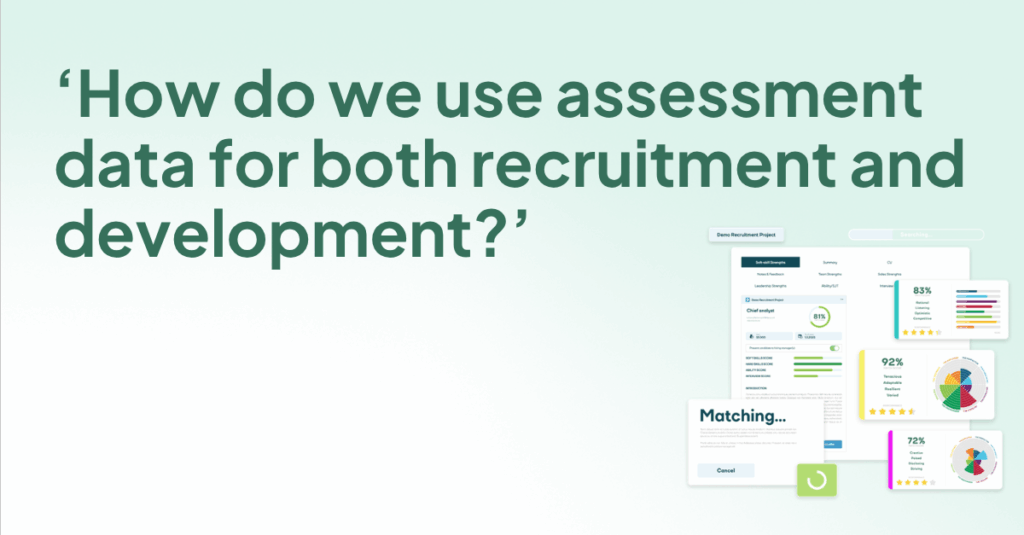
The same data that helps recruiters understand candidate fit can also help managers onboard people more effectively, support development conversations, identify team strengths and guide future career planning. The key is not to create more work for HR teams. It is to use the same assessment data more intelligently across different stages of the employee journey.
A modern assessment platform should help organisations move beyond one-off hiring decisions and make assessment insight useful before, during and after recruitment.
Extending assessment data beyond the initial assessment phase
Many organisations put real effort into assessment during recruitment, then lose the value once the candidate is hired. The data may sit in a report, be reviewed by the hiring panel and then disappear from everyday use.
This creates a gap. Recruitment teams have useful insight into how someone thinks, works and behaves, but managers may not use that insight during onboarding or development. As a result, the organisation misses the chance to turn assessment data into practical support.
The aim should be to extend the value of assessment beyond the initial assessment phase. This does not mean using test scores rigidly or treating people as fixed profiles. It means using psychometric data as a structured starting point for better decisions and better conversations.
For example, a personality questionnaire may show that someone is highly adaptable, motivated by variety and comfortable with change. That insight may help during recruitment, but it may also shape their onboarding plan, future project opportunities and longer-term development. Another person may show strong attention to detail, high order and a preference for clear structure. That might be useful for selection, but also for understanding how best to manage them once they join.
When assessment data is used across the employee lifecycle, it becomes more than a selection tool. It becomes part of the organisation’s people intelligence.
Multiple report outputs for ongoing use
One reason assessment data is underused is that different people need different outputs.
A recruiter does not need the same report as a line manager. A hiring panel does not need the same level of insight as a coach. A candidate does not need the same interpretation as a leadership development team.
This is where report outputs matter.
The data itself does not need to be manually split or rebuilt for every use case. With the right assessment platform, the same underlying assessment data can feed different report types depending on what the organisation needs at each stage.
For pre-hire decisions, a selection report may help recruiters and hiring managers understand role fit, likely strengths, possible risks and areas to explore in interview. This supports a more structured and evidence-based recruitment process.
For onboarding, an onboarding report can help the manager understand how the new starter may prefer to communicate, learn, receive feedback and settle into the role. This can make early management conversations more specific and useful.
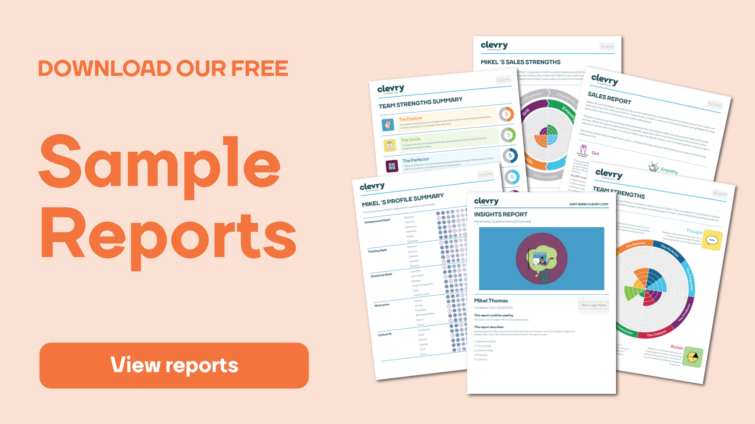
For post-hire development, insight reports can help employees understand their own working style, motivation, interpersonal preferences and development areas. This can support coaching, performance reviews and personal development planning.
For ongoing development, team strengths or leadership reports may help organisations understand wider capability, team balance, collaboration risks, leadership potential and future succession needs.
The value comes from matching the report to the decision. The same personality questionnaire can support multiple outputs, but each report should be written for the person using it and the decision they need to make.
Using Clevry for recruitment and development
Clevry is designed to help organisations use assessment data across both recruitment and development. Rather than treating assessment as a single event, the platform helps employers gather structured insight that can be applied across different people processes.
During recruitment, Clevry can support candidate screening, shortlisting, final-stage validation and interview planning. Personality questionnaires, ability tests and role-relevant assessments can help hiring teams understand whether a candidate has the traits, preferences and capabilities needed for the role.
But the same assessment data can also support what happens next. Once someone joins the organisation, Clevry reports can help managers onboard them more effectively, guide early conversations and understand how to get the best from them.
This is particularly useful because the transition from candidate to employee is often poorly managed. A person may be assessed thoroughly before they join, but their new manager may receive very little practical information about how to support them. Clevry helps close that gap by making assessment insight available in formats that are useful beyond hiring.
For HR teams, this creates a more connected approach. Recruitment, onboarding, learning and development, internal mobility and succession planning can all draw from a more consistent evidence base.
Turning assessment into long-term people insight
Assessment data becomes most useful when organisations stop treating it as a one-off recruitment asset. The real value comes when the same insight supports decisions across the full employee journey.
This requires two things: reliable assessment data and flexible reporting. The data needs to be robust enough to support important decisions, and the reports need to be practical enough for different users and purposes.
Clevry helps organisations do both. Our assessment platform enables employers to use psychometric assessment for recruitment, onboarding, development and wider workforce planning. With multiple report outputs from a single personality questionnaire, HR teams can get more value from the data they already collect.
The question is not whether assessment data should be used for recruitment or development. It should support both.
Used well, assessment insights can help organisations hire better, onboard more effectively, develop people with greater precision and make stronger decisions about future potential.