
Introducing psychometric assessment is rarely difficult because the technology is unavailable. The hardest part is often showing senior stakeholders why the organisation should change its current hiring process and what commercial value the change will create.
Start with the problem
Before selecting assessments, define what is currently going wrong.
Common problems include large applicant volumes, inconsistent shortlisting, too much reliance on CVs, hiring managers making decisions on instinct, repeated interview stages, weak differentiation between candidates and early attrition.
The business case should describe these problems in operational terms.
For example:
- Recruiters spend too much time manually screening applications.
- Hiring managers receive little objective evidence before an interview.
- Different managers assess candidates using different criteria.
- High-volume campaigns create administrative bottlenecks.
- New hires sometimes turn out to be poorly matched to the role despite performing well at interviews.
Once the problem is specific, it becomes much easier to explain what the assessment process needs to change.
Define what success looks like
The next step is to agree how the organisation will judge whether assessment is working.
Measures will vary by role, but useful indicators can include time spent screening, time to shortlist, time to hire, interview-to-offer ratio, hiring-manager confidence, probation success, early retention and subsequent performance.
Quality of hire should not be reduced to one universal number. For a sales role, early revenue performance may be relevant. For a customer-service role, quality metrics and retention may matter more. For a graduate programme, progression and performance ratings may be more useful.
The business case becomes stronger when assessment is connected to outcomes the organisation already monitors.
Show how Clevry changes the process
Clevry allows employers to create assessment campaigns combining personality questionnaires, ability tests and situational judgement assessments within one seamless online process.
This creates a more structured evidence base before a hiring decision is made.
Ability tests can provide objective information about relevant reasoning capabilities. Situational judgement tests can examine how candidates respond to realistic workplace scenarios. Personality questionnaires provide insight into preferences, motivations and typical patterns of behaviour.
Our library of personality scales, allows employers to build questionnaires around the characteristics relevant to a particular role, values framework or competency model.
The important point is that employers do not need to use every available assessment. The business case should explain how the chosen assessments map to the demands of the job.
Reduce manual recruitment work
Assessment technology should make recruitment easier to operate, not create another administrative layer.
Clevry allows recruiters to group assessments for a particular vacancy or recruitment programme. Campaign settings can include automatic registration and response emails, closing dates, comparison groups and other assessment options.
Candidates can be invited individually, through a campaign link or in bulk. Recruiters can then monitor completion and access results centrally.
For more complex recruitment processes, the platform can extend the workflows to include application forms, psychometric assessments, recorded video interviews, business-case exercises and written tasks.
When building the financial case, estimate how much recruiter time is currently spent on administration that could be reduced or standardised.
Improve shortlisting quality
The strongest business case is not simply about doing the same work faster. It is about improving the evidence used to make decisions.
Clevry’s job-match functionality allows employers to define the personality profile associated with the demands of a role. The system can then generate a Selection Report describing the degree of fit between the candidate and those requirements.
Importantly, job matching does not assume that a high personality score is automatically desirable. Different roles can require different preferences.
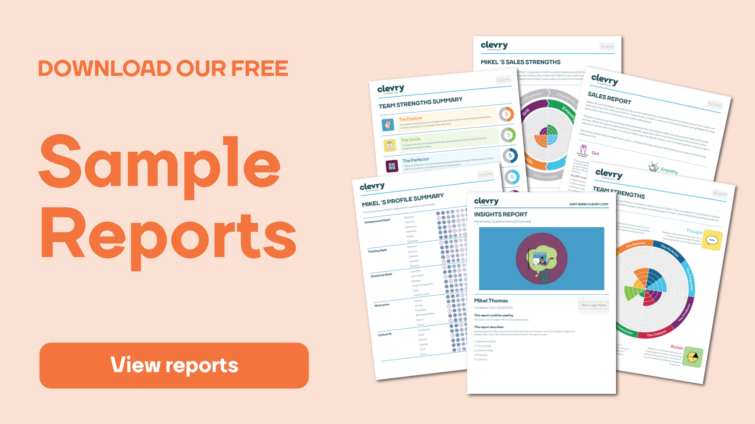
The Selection Report for example combines a job-fit summary with a traffic-light presentation and more detailed information, helping recruiters and hiring managers understand where the candidate appears to align with the role and where further exploration may be useful.
Strengthen interviews
Psychometric assessment should support human judgement rather than attempt to replace it.
Assessment results should always be considered alongside other information about the candidate. Personality questionnaires describe preferences and self-perceptions. They do not provide an objective measure of skill or competence.
This is one reason the Interviewer Report is commercially useful. It takes personality information and provides tailored interview questions and guidance that can help hiring managers explore hypotheses raised by the assessment.
Instead of replacing the interview, psychometrics can make the interview more focused.
Create value after the hire
Many business cases underestimate the value of assessment because they treat it as a recruitment-only expense.
The Clevry platform can generate multiple reports from the same personality questionnaire data. The successful candidate’s results can support an Onboarding Report, which helps the line manager understand working preferences, motivational drivers and ways to support the new employee.
Depending on the questionnaire used, assessment data can also inform Team Strengths, Sales and Leadership reports.
This extends the value of the original assessment beyond the selection decision.
Build an evidence loop
The strongest long-term case for psychometric testing comes from validation.
Once an organisation has sufficient hiring and performance data, it can compare assessment results with later outcomes. This can help identify which assessment scores appear to differentiate stronger performers or where an existing process may need adjustment.
We also supports norm-referenced scoring and can provide bespoke comparison groups for organisations with sufficient candidate volumes.
The objective is to move from “we think this assessment helps” to an evidence-based understanding of how it contributes to hiring decisions.
Present the commercial case
A concise business case should answer five questions.
- What recruitment problem are we solving?
- What will change in the candidate and recruiter journey?
- Which outcomes will we measure?
- How will assessment reduce effort or improve decision quality?
- How will we review whether it is working?
At Clevry we have been providing assessment tools for over 30 years to support that process through configurable assessments, campaign management, job matching, automated reporting and post-hire reports.
For senior stakeholders, the argument is therefore broader than buying psychometric tests. It is about creating a more consistent, measurable and evidence-led way to make people decisions.
That is the business case worth making.
If you have any questions drop us a message and one of the team would be happy to get back to you and show you a quick demo of the platform inaction.