UNLEASH 2026 runs from 20 to 22 October at the Paris Convention Centre.
Which exhibitors are worth visiting at UNLEASH 2026?
With more than 250 exhibitors attending Unleash, and only two full days to get around each, it can pay dividends to make a plan of who you want to visit before the event commences.
It goes without saying that the vendors you prioritise should be linked to the HR problems you’re actively trying to solve. For example, a team fixing a broken hiring process should have a very different plan to a team rolling out a new core HR system. However, with so many options, creating a tailored shortlist is a time-consuming task.
In order to help, we’ve picked out the companies worth adding to your list, broken out by the challenges they solve. We cover skills-based hiring and assessment, talent intelligence, learning, recruitment, employer branding, core HR, employee experience and enterprise transformation.
UNLEASH has organised the 2026 agenda around AI, skills, operating models, workforce strategy, reward, data, technology and transformation, so most stands on the floor will map to one of those themes.
Quick breakdown: the best UNLEASH 2026 exhibitors by category
Category | Recommended exhibitor | Best for |
Skills-based hiring and talent assessment | Clevry | Measuring soft skills and potential with validated psychometrics |
Employer branding and talent attraction | Radancy | Career sites, recruitment advertising and employer brand |
Contingent workforce and talent transition | Randstad Enterprise | Contractor spend, redeployment and outplacement |
Core HR and enterprise HCM | Oracle | Multi-country system of record with AI agents built in |
HR software for growing organisations | Personio | European mid-market teams consolidating HR admin |
HR service delivery and workflow | ServiceNow | Cutting HR ticket volume across departments |
Learning and development | Docebo | Learning, knowledge and skills in one platform |
Employee engagement and performance | LutherOne | Continuous feedback and early warning on attrition |
Best for skills-based hiring and talent assessment: Clevry
Booth #: 410
Who should visit the stand? Early careers and volume recruiters dealing with high application numbers, talent leaders looking to make more confident, data-led hiring decisions, and L&D teams seeking better insight to support internal progression and development.
Overview:
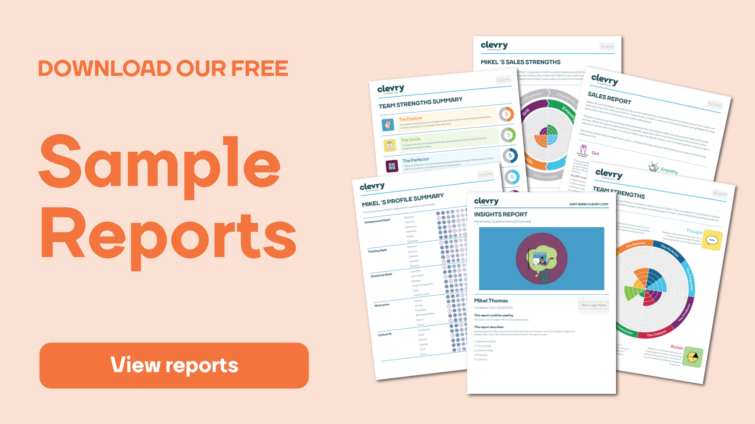
Clevry is a talent assessment platform covering personality questionnaires, ability tests, situational judgement tests and 360 feedback. While traditional hiring often relies heavily on CVs and past experience, Clevry helps organisations understand the behavioural characteristics and abilities that contribute to performance, using scientifically developed assessments to support more objective, evidence-based decisions. The same insights can be used beyond recruitment to support internal development, progression and talent management.
Three reasons to stop at this stand:
- Build the success profile, then hire against it. Define the traits and abilities that matter most for a role, then assess candidates against that profile from the outset. As applications come in, Clevry helps turn large applicant volumes into a clear, prioritised shortlist based on role fit. The same approach works for specialist and senior hires where the criteria need to be tightly defined. With Clevry, that level of role-specific customisation is built into the platform rather than treated as a bespoke extra.
- Reports the hiring manager can act on. Every shortlisted candidate comes back with a personalised feedback report. Tailored interview questions mean a hiring manager can walk into an interview already knowing which strengths and weaknessesto probe. Stuck between two candidates? Easily compare profiles side-by-side on the specific attributes you chose to measure.
- See the real person behind the AI. Clevry has a range of anti AI measures in their assessments, so what you receive reflects the applicant’s actual potential rather than a polished machine answer.
You can also buy the expertise alongside the software: bespoke assessment design, a managed assessment service, BPS test user training, diversity and inclusion audits, and recruitment process outsourcing. Key if you have a lean talent team and no occupational psychologist in-house.
Best for employer branding and talent attraction: Radancy
Booth #: 306
Who should visit the stand? Employer brand and attraction teams at large employers, anyone whose career site pulls traffic but converts poorly, and teams spending heavily on job advertising without knowing the return.
Overview:
Radancy began as a recruitment advertising agency and rebuilt itself as a software company, which shows in the blend of creative and technical. The Talent Acquisition Cloud covers career sites, programmatic job advertising, candidate CRM, hiring events, employer brand development and analytics. It sits alongside your ATS rather than replacing it as the system of record.
Two reasons to stop at this stand:
- Fix the top of the funnel. Career sites here work as recruitment engines rather than job lists, with personalised journeys, intelligent job distribution and search built for candidates who arrive with only vague intent. Losing people between the advert and the apply button? That is the problem Radancy exists to solve.
- Spend the advertising budget better. Programmatic distribution paired with analytics that forecast application volumes against your hiring goals. Radancy publishes reductions in staffing agency spend for employers who consolidate onto the platform, so ask to see the working behind those numbers.
One caveat worth knowing. Reviewers consistently flag a steep initial setup, so this suits teams with some digital maturity in talent acquisition already.
Best for contingent workforce and talent transition: Randstad Enterprise
Booth #: Meeting Room 6
Who should visit the stand? Enterprise talent leaders who struggle to calculate what their org spends on contractors, and HR teams heading into a restructure, a site closure or a large redeployment.
Overview:
Randstad Enterprise sells delivery and expertise rather than software, which makes it an unusual stand on an HR tech floor. Part of Randstad N.V., it covers managed services programmes, services procurement and talent BPO through Randstad Sourceright, alongside career coaching, internal mobility and outplacement through Randstad RiseSmart.
Two reasons to stop at this stand:
- Get control of the contingent workforce. Most organisations have good visibility of permanent headcount and almost none of contractors, freelancers and statement-of-work spend. A managed services programme brings that population into view, with the compliance and cost controls attached. Ask about direct sourcing if you are paying agency margins on roles you could fill yourself.
- Plan the exit as carefully as the entrance. Outplacement and redeployment usually get arranged once a restructure is already underway. Randstad RiseSmart handles both, and redeployment keeps hold of skills you have already paid to develop.
Randstad Sourceright has been named a Leader and Star Performer on Everest Group’s MSP and SOW assessments across the last 12 years, which helps if you need to build an internal business case.
Best for core HR and enterprise HCM: Oracle
Booth #: 145
Who should visit the stand? HR teams in large, multi-country organisations running or replacing a system of record, particularly anyone already using Oracle for finance.
Overview:
Oracle Fusion Cloud HCM covers the full employee lifecycle, from core records and payroll through absence, compensation, recruiting, talent and workforce structures. It sits inside Oracle Fusion Cloud Applications, so HR and finance data share a foundation. That is the main reason it lands on enterprise shortlists.
Two reasons to stop at this stand:
- The agentic AI is genuinely new. In August 2026 Oracle announced Fusion Agentic Applications for HR spanning work architecture, learning, manager coaching, employee growth and mobility, and workforce planning. Specific agents handle role design, skills profile updates and skills supply versus demand analysis. Anything launched that recently deserves a live demo rather than a slide.
- You can build your own agents. AI Agent Studio lets teams assemble automation from Oracle, partner and external agents. These agents act inside real business processes rather than flagging things for a human later, so ask what the guardrails and approval hierarchies look like.
Every major HCM vendor is making a version of this pitch in 2026. The question to press is whether the agents run on unified enterprise data or a layer bolted on top.
Best for HR software in growing organisations: Personio
Booth #: 211
Who should visit the stand? Heads of growing HR teams, especially those operating across several European countries, currently running HR on spreadsheets and a handful of disconnected tools.
Overview:
Founded in Munich in 2015, Personio built an all-in-one HR system for European small and mid-sized companies, the group too complex for spreadsheets and too small for enterprise suites. It covers core records, applicant tracking, onboarding, time tracking, absence, documents with e-signature, performance, surveys and payroll preparation, with native payroll in selected European markets.
Two reasons to stop at this stand:
- Consolidate the stack. One system in place of an applicant tracker, a holiday spreadsheet, a shared drive of contracts and a separate performance tool. Buyers who treat the move as a genuine consolidation project, rather than adding one more tool, report far stronger outcomes.
- European compliance comes as standard. GDPR alignment, EU data residency and localised labour law logic are built into the product rather than configured afterwards. Across multiple European entities, that removes a large amount of manual work.
Implementation typically runs weeks rather than the year an enterprise suite demands. Pricing is quote-based, so arrive at the stand with your headcount and module list ready.
Best for HR service delivery and enterprise workflow: ServiceNow
Booth #: 151
Who should visit the stand? HR operations and shared services leaders handling high query volumes by email, and anyone whose onboarding falls apart as it crosses between HR, IT, facilities and legal.
Overview:
ServiceNow treats HR as a service problem rather than a records problem. HR Service Delivery provides case management, a knowledge base, the Employee Center portal, Manager Hub and Employee Journey Management, all running on the wider ServiceNow AI Platform that many organisations already use for IT.
Two reasons to stop at this stand:
- Onboarding that crosses departments. A new starter needs a laptop, a building pass, a signed contract and a payroll record, and those four requests sit with four different teams. Workflows here span all of them, which is difficult to replicate inside an HR system alone.
- Cut the repetitive query load. Self-service and AI agents handle routine requests, escalating to a person once a case gets complicated. The gains depend heavily on how well the knowledge base gets built, so ask what that work involves.
It’s worth being clear on scope. This complements a core HR system rather than replacing one, so budget for both.
Best for learning and development: Docebo
Booth #: 103
Who should visit the stand? L&D leaders, compliance training owners, and anyone who trains partners, franchisees or customers alongside their own employees.
Overview:
Docebo has spent twenty years in enterprise learning and is now moving from learning management system to a combined learning, knowledge and skills platform. At its Inspire event in April 2026 it launched AgentHub, Enterprise Knowledge, Skills Intelligence built on its 365Talents acquisition, and an MCP Server that makes learning data available inside AI assistants such as Claude, Copilot and ChatGPT.
Two reasons to stop at this stand:
- Turn what you already know into training. AgentHub connects to more than 20 knowledge sources including Confluence, SharePoint and Google Drive, then builds learning content from them. If your subject matter experts have no time to write courses, this is the claim worth testing on the stand.
- Learning in the flow of work. Companion delivers learning inside whatever system someone is already working in, and AI Tutor explains concepts on demand. Both tackle the same problem, which is that people rarely stop what they are doing to open the LMS.
Extended enterprise is the real differentiator here. If you train customers or partners commercially, ask about the eCommerce and multi-currency functionality.
Best for employee engagement and performance: LutherOne
Booth #: 431
Who should visit the stand? People teams sitting on an annual survey they have struggled to act on, leaders who spotted a retention problem too late, and organisations trying to replace the annual review with something continuous.
Overview: LutherOne calls its product a people activation platform, built in modules covering real-time engagement surveys, continuous 360 feedback, performance and goal tracking, digital recognition, skills mapping and internal communications. It works for organisations from around 200 employees up to enterprise scale.
Two reasons to stop at this stand:
- Early warning on attrition. LutherOne says its algorithms detect disengagement up to a year before someone resigns. Treat that as a claim to interrogate rather than a given, though the underlying idea of continuous listening in place of annual snapshots holds up well.
- Recommendations rather than dashboards. Managers receive suggested next steps written by people scientists, with action planning that assigns owners and deadlines. Survey data nobody acts on is a common and expensive failure, so ask to see exactly what a manager receives.
Rotating question sets mean employees answer fewer questions while the organisation still gathers continuous data, which helps with survey fatigue.