
AI already shapes modern hiring in ways many organisations do not fully understand.
A recruiter reviews a shortlist generated by software. A hiring manager receives ranked candidates from an assessment platform. A talent acquisition team uses automated screening to reduce application volumes before interviews even begin.
Today many employers who are using AI intheir recruitment processes cannot clearly explain exactly where or how it operates, how decisions are being influenced, or what safeguards exist around fairness and accountability.
This is where the idea of “Shadow AI” comes in.
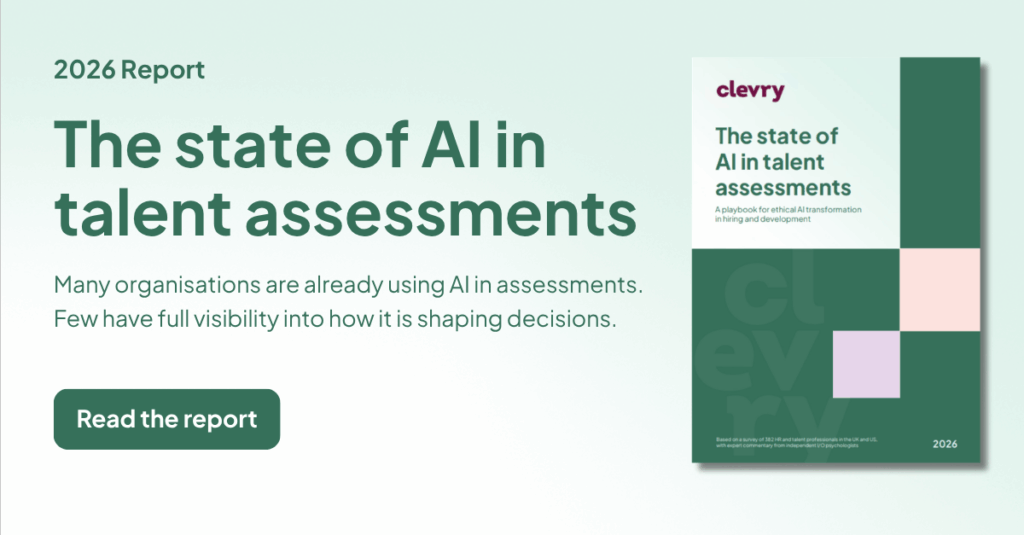
Our recent report on the state of AI in talent assessments found that while 51% of HR and talent professionals confirmed their provider uses AI, another 34% either suspected AI was involved or admitted they simply did not know. That uncertainty creates risk.
When a recruiter cannot explain how a system scores candidates, accountability weakens. When a hiring manager trusts rankings without understanding how they were produced, poor decisions become harder to challenge. When an organisation relies on automated recommendations without governance, responsibility becomes blurred.
AI in hiring is no longer a future discussion. The technology already influences recruitment decisions at scale. The issue for many professionals we surveyed are concerns around visibility and control.
What is ‘Shadow AI’?
Shadow AI describes situations where AI influences hiring decisions without full transparency, understanding, or oversight from the organisation using it.
Sometimes this happens because a vendor embeds AI features into a recruitment platform without clearly explaining them. Sometimes HR teams adopt software quickly and never investigate how the technology actually operates. Sometimes recruiters assume the system is objective because the interface appears polished and data-driven.
A recruiter may not know how an assessment score was generated. A hiring manager may not understand how candidate rankings were produced. An organisation may rely on automated filtering without knowing which variables shape outcomes behind the scenes.
The problem is not necessarily that AI exists within the process, but when people trust outputs they cannot interrogate problems can emerge.
Our research revealed a major visibility gap across recruitment teams. One-third of respondents effectively operated inside this “Shadow AI” category. That means algorithms potentially influence decisions about hiring, promotion, and development without full understanding from the people responsible for those outcomes.
This creates an uncomfortable contradiction. Organisations remain legally and ethically accountable for recruitment decisions even when software contributes to those decisions.
A vendor does not absorb reputational damage if a hiring process appears discriminatory. A platform provider does not sit in front of a tribunal explaining why a candidate was rejected, but the employer does.
What are the dangers of ‘Shadow AI’ in hiring?
Recruiters lose visibility
A recruiter should understand why a candidate received a particular recommendation or score. Without transparency, recruiters become dependent on outputs they cannot properly explain or challenge. The software effectively becomes an invisible decision-maker operating behind the scenes.
This can create passivity inside recruitment processes.
A hiring manager may assume the rankings must be accurate because “the system produced them”. A recruiter may stop questioning outcomes because the technology appears sophisticated.
Over time, human judgement weakens rather than strengthens.
Organisations increase legal exposure
Employment decisions carry legal consequences.
If a candidate challenges a recruitment outcome, an organisation needs to explain how the decision occurred. That becomes difficult when the people using the system do not fully understand the logic behind it.
Under the EU AI Act, employment-related AI systems already fall into a high-risk category requiring stronger governance, oversight, and documentation.
Regulatory pressure will likely increase rather than decrease over the next few years and organisations relying on opaque systems may struggle to defend decisions when put under scrutiny.
Bias becomes harder to detect
AI systems can inherit patterns from historical hiring data, assessment structures, or flawed assumptions built into the process.
Without ongoing audit and independent review, unfair outcomes may continue unnoticed.
Many employers still treat fairness as a one-time procurement discussion rather than an operational responsibility. A vendor may promise reduced bias during implementation, but unless monitoring continues, those assurances remain difficult to verify.
Our report identified a major audit gap within HR teams.
While 87% of respondents said fairness and audit mattered, only 38% actively checked for independent validation. This disconnect creates risk because bias cannot be managed through assumption alone.
Candidate trust deteriorates
Candidates increasingly understand that AI plays a role and influences recruitment in some form.
Many applicants already suspect that algorithms shape shortlisting and are involved in assessment scoring and screening decisions. If those processes feel opaque or arbitrary, trust declines quickly.
Candidates who believe they experienced an unfair or robotic process are less likely to engage positively with the organisation afterwards. Strong applicants may withdraw from future opportunities entirely.
Recruitment technology influences brand perception whether organisations acknowledge it or not.
The cheating arms race
Shadow AI concerns do not exist in isolation. At the same time employers use AI within recruitment, candidates increasingly use AI to navigate hiring processes themselves.
Applicants now use generative AI to write CVs, prepare interview responses, complete written exercises, and optimise applications.
Our research found that 26% of respondents had already seen evidence of candidates using AI to manipulate assessment results, while another 36% believed it was likely happening within their organisation.
Traditional CV screening becomes less reliable when language models can produce polished applications instantly. Written assessments also become more vulnerable because AI performs exceptionally well at generating persuasive text.
This trend is pushing many organisations toward assessments that measure qualities that are harder to fake. Behavioural assessments, situational exercises, timed problem-solving tasks, and scientifically grounded personality questionnaires become more valuable because they focus on capability rather than presentation alone.
The organisations adapting successfully are redesigning hiring processes around evidence rather than assumption.
How do we ensure AI use in talent assessments is fair?
Fairness requires active oversight rather than passive trust.
An organisation cannot simply purchase an assessment platform and assume fairness exists automatically. Recruitment teams need clear governance around how systems operate and how outcomes are monitored.
Several practical steps matter.
Demand transparency from vendors
A provider should explain clearly:
- Where AI operates within the process
- How scores are generated
- What data influences outcomes
- How fairness is tested
- How human oversight works
- What independent validation exists
Recruiters should not accept vague explanations built around “proprietary algorithms”. If a system influences hiring decisions, the organisation using it deserves meaningful visibility.
Conduct independent audits
Fairness requires evidence. Independent reviews help organisations identify adverse impact, inconsistent outcomes, or problematic scoring patterns before they become larger issues.
Audits should become continuous rather than occasional.
Hiring environments change. Candidate behaviour changes. Job requirements evolve. Systems need ongoing monitoring rather than static approval.
Keep humans accountable
If recruiters are going to use AI then it should be used to support decisions rather than replace accountability entirely.
A recruiter still needs ownership of the hiring process. A hiring manager still needs authority to question recommendations. HR leaders still need visibility into how assessments operate.
The strongest organisations treat AI as a decision-support tool rather than an unquestionable authority.
The future of hiring depends on visibility
AI is here to stay and will remain embedded within recruitment whether we like it or not.
The operational advantages are too great for organisations to abandon entirely. Recruiters will continue using technology to manage scale, structure assessments, and support hiring decisions. The question is whether organisations understand the systems shaping those decisions.
Shadow AI creates danger because invisible influence massively weakens accountability.
A hiring manager should know how a recommendation was produced. A recruiter should understand why a candidate received a particular score. An organisation should be able to defend every stage of its hiring process under scrutiny.
That requires both transparency and employers willing to stay actively involved in decisions that technology increasingly helps shape.
The safest recruitment process in 2026 will not be the one using the most AI.
It will be the one where people remain fully aware of how the AI operates, what risks exist, and who remains accountable when decisions affect real human lives.
See what the latest data says by checking out the State of AI In Talent Assessments report here.